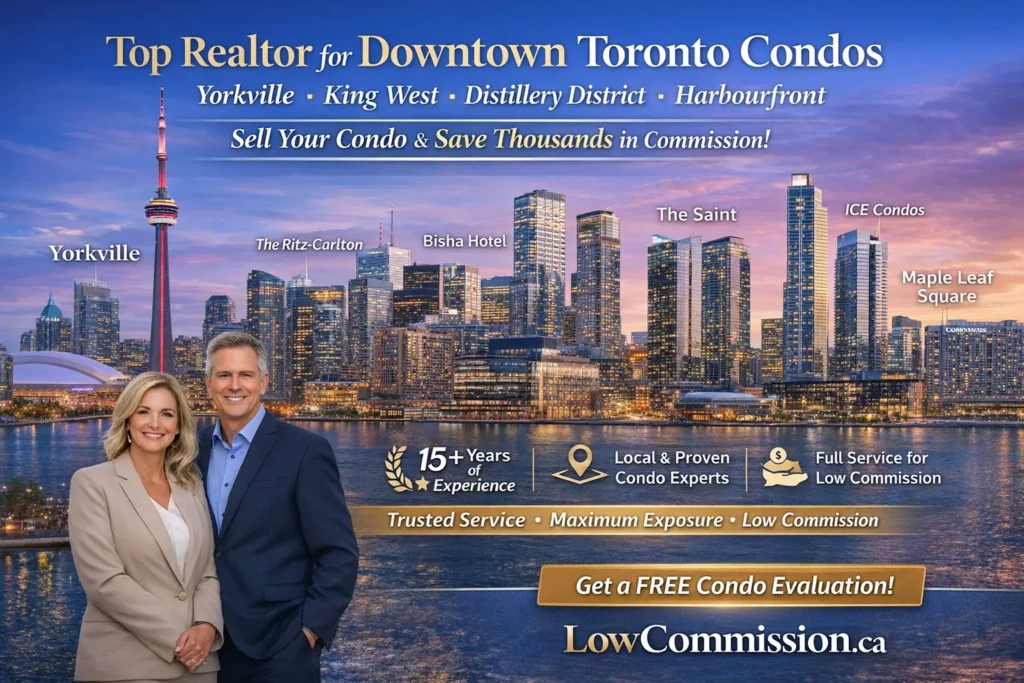
Quick answer: Yes, you can sell a downtown Toronto condo with a 1 percent condo listing commission in Toronto and still get full-service representation: pricing, professional marketing, showings managed with your building’s rules, offer negotiation and support through closing. The 1% covers the listing side only. Buyer-brokerage compensation, if you offer it, is separate and disclosed up front, and HST applies.
Selling a condo in CityPlace or the St. Lawrence Market area is not the same as selling a detached home in Milton. The buyer pool, the paperwork and the way units are compared are all different. That is exactly why the listing fee deserves a second look.
Why Downtown Toronto Condo Owners Should Review Listing Costs
Downtown condo buyers compare units very closely. They line up similar suites in the same tower or the one next door and look at floor, exposure, square footage, parking, locker and monthly fees. With so much direct comparison, there is usually limited room on price. That makes the costs around the sale, including commission, a bigger share of what you control.
Many downtown owners are also investors who have rented the unit out, or first-time owners moving up to a house in the suburbs. In both cases, every dollar kept at closing goes straight into the next step.
How a 1% Listing Commission Works
The listing side is 1% of the final sale price, plus HST. It pays for representation of you, the seller. Separately, you decide whether to offer compensation to the buyer’s brokerage and how much. Both are written into your listing paperwork before anything goes live.
Illustrative maths only, listing side, before HST:
| Example condo sale price | At 1% listing | At an example 2.5% listing |
|---|---|---|
| $750,000 (example) | $7,500 | $18,750 |
On that example, the listing-side difference is $11,250. Your real numbers depend on your sale price and your choice on buyer-side compensation. The 1% listing fee page explains the structure in detail.
Full-Service Condo Marketing and Professional Representation
Condo marketing has its own checklist. Here is what goes into a downtown listing:
- Photos timed for light: a south-facing unit shot at midday, a west-facing one in late afternoon, with the view captured cleanly.
- Accurate floor plan: condo buyers rely on it to compare layouts across the building.
- Building highlights: concierge, gym, rooftop terrace, guest suites, bike storage and pet rules.
- Location detail: walk to the PATH, streetcar lines, the waterfront, Union Station or the Financial District.
- Clear facts: parking, locker, monthly fee and what it includes, such as heat, water or hydro.
Behind the scenes, we are REALTORS® with RE/MAX Real Estate Centre Inc., Brokerage, with 15+ years in the GTA. The listing, showings and negotiation are handled with the same care at 1% as at any traditional fee.
Pricing and Positioning Your Downtown Toronto Condo
Pricing a condo starts with your own building. Recent sales of similar suites, stacked above or below yours, are the strongest guide. From there, adjust for:
- Floor height and view, especially lake or skyline views versus a view into the next tower
- Exposure and natural light
- Layout efficiency, such as a usable den versus an awkward nook
- Parking and locker, which some downtown buyers need and others will not pay for
- Monthly fees relative to similar buildings in King West, Liberty Village or Yonge and Bloor
- Condition of finishes and any recent updates
Positioning is about who the likely buyer is. A compact one-bedroom near the Financial District may appeal to young professionals and investors. A larger two-bedroom with parking may draw downsizers from Etobicoke or North York. The marketing should speak to that buyer.
Showings, Offers and Negotiation
Condo showings depend on building rules: concierge sign-in, lockbox policies, and limits on when showings can happen. If your unit is tenanted, showings must respect the tenant’s rights and proper notice under Ontario rules. We plan the schedule around all of that.
When offers arrive, we review price and terms together: deposit, financing condition, the buyer’s review of the status certificate and the closing date. The status certificate is the condo corporation’s package on the building’s finances, rules, reserve fund and any legal issues. Ordering it early avoids delays once you have a buyer.
Understanding Listing Commission and Other Selling Costs
Beyond the listing fee, a condo seller should plan for:
- Any buyer-brokerage compensation you choose to offer
- HST on commission
- Your real estate lawyer’s fees
- Mortgage discharge fees and any prepayment penalty
- The status certificate fee charged by the condo corporation
- Elevator booking or move-out deposits set by the building
- Adjustments for prepaid condo fees and property tax on closing
Land transfer tax, including Toronto’s municipal portion, is generally paid by the buyer, not the seller. Confirm the details for your situation with your lawyer.
How to Get Started With a Lower-Commission Condo Listing
The first step is a pricing conversation based on your building and your goals. From there, we plan prep, photos and a launch date that fits your move. See how the full process works on our selling page or our Toronto page.
Frequently asked questions
Can I sell my Toronto condo with a 1% listing commission?
Yes. We list Toronto condos with a 1% listing-side commission and full service, including pricing, marketing, showings, negotiation and closing support. HST applies.
Does a lower listing commission include full service?
With our model, yes. The fee is lower, but the work is not reduced. Always ask any brokerage for a written list of what is included.
Is buyer-agent compensation included in the listing commission?
No. The 1% is for the listing side. Any compensation for the buyer’s brokerage is a separate amount you decide on, and it is disclosed before your listing goes live.
Want to know what your downtown suite could sell for and what you would keep? Book a free in-depth home evaluation. Is your unit owner-occupied or tenanted right now?
